Angular 架構
Angular 是個 Framework ,使用 HTML 與 JavaScript ( TypeScript) 來建置 Client 端應用程式。
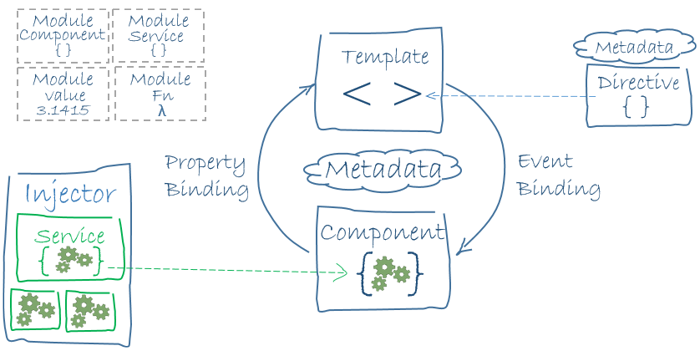
Angular 提供一個完整的架構,我們可以依循該架構建構一個有系統,有脈絡的 SPA 應用程式,在這一章節裡,我們會說明 Angular 架構的組合元素,及元素間的關係,關係如下圖
Modules
Angular 是由許多 ngModules 所組成的,我們可以透過 ngModules 模式來管理程式碼,進階的說明會在 ngModules 章節說明
任何的 Angular 應用程式一定會有一個起始模組 ( root module ),通常會稱為 AppModule ,而這一個起始模組裡會決定要啟動的 Components、providers 或是其他的 Feature Modules。
一個 ngModule 是一個裝飾器函式,包含一個描述區段 ( metadata),其重要的屬性有
- declaration - 定義
components、directives和pipes的區塊 - exports - 開放給其他 modules 使用的項目
- imports - 注入其他 modules ,只能使用其他 modules exports 所定義的項目
- providers - 建立服務,是當下 Modules 的全域服務
- bootstrap - 要啟動的
Component,僅適用於起始模組
import { NgModule }      from '@angular/core';
import { BrowserModule } from '@angular/platform-browser';
@NgModule({
  imports:      [ BrowserModule ],
  providers:    [ Logger ],
  declarations: [ AppComponent ],
  exports:      [ AppComponent ],
  bootstrap:    [ AppComponent ]
})
export class AppModule { }
Angular libraries
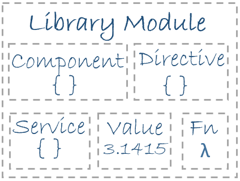
Angular 內建許多 modules,每一個 modules 都提供不同的功能,我們可以透過 import 的方式,使用各 modules 所提供的功能
import { Component } from '@angular/core';
import { BrowserModule } from '@angular/platform-browser';
我們可以注意到,不同的 module 名稱前面都掛有 @angular 的名稱,這一個稱為 npm scope naming,是開發團隊用來整理 library 使用的,也讓使用者知道這些 library 都是來自同一個團隊或是來自相同的專案。
Components
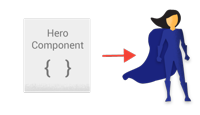
Component 是 Angular 應用程式用來顯示使用的一個重要元素,我們可以定義給 view 使用的邏輯判斷,變數顯示,或進一步的與其他 API 服務做溝通。
export class HeroListComponent implements OnInit {
  heroes: Hero[];
  selectedHero: Hero;

  constructor(private service: HeroService) { }

  ngOnInit() {
    this.heroes = this.service.getHeroes();
  }

  selectHero(hero: Hero) { this.selectedHero = hero; }
}
一個完整的 component 會包含以下項目
Templates
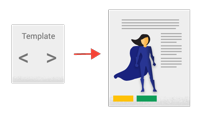
可在 component 的 metadata 區塊指定 template 的路徑,或是直接將 template 寫在 metadata 裡面,template 會與 component class 綁在一起,可以使用 component 所定義的屬性及方法,可以使用 directive / pipe 來加強顯示的功能,或加入其他的 component 作為顯示內容的一部份。
<h2>Hero List</h2>

<p><i>Pick a hero from the list</i></p>
<ul>
  <li *ngFor="let hero of heroes" (click)="selectHero(hero)">
    {{hero.name}}
  </li>
</ul>

<hero-detail *ngIf="selectedHero" [hero]="selectedHero"></hero-detail>
Metadata

Component 也有裝飾器,@Component , 裡面會定義幾個重要的項目
- selector:告訴 Angular,代表目前 component 的 css selector 是什麼,例如
<hero-list> - templateUrl:指定 html 檔案的路徑
- styleUrl:指定一個或多個樣式檔的檔案路徑
- providers:設定 services,須注意 service 的 scope 問題
Data binding
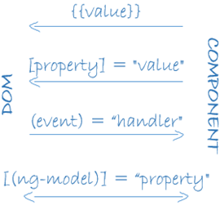
Angular 提供 4 種方式來處理 template 與 component class 間的互動
- `` :將 component 的屬性顯示在 template 上
[property]:將 component 的屬性綁定到 template html 元素的屬性上(event):將 component 的方法綁定到 template html 元素的事件上[( two-way-binding )]="property":雙向綁定的語法糖
<li>{{hero.name}}</li>
<hero-detail [hero]="selectedHero"></hero-detail>
<li (click)="selectHero(hero)"></li>
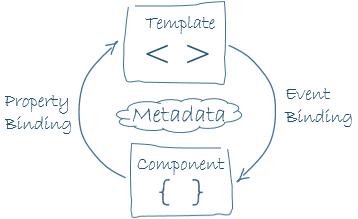
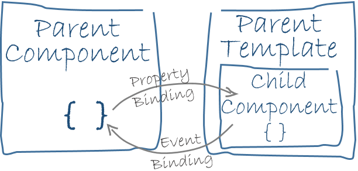
整體的運作方式如下圖
Directives
Components 是有 template 的 directives,Directives 的裝飾器是 @Directive。Directives 分成兩類
結構性的 directives:針對顯示結構上的異動
<li *ngFor="let hero of heroes"></li>
<hero-detail *ngIf="selectedHero"></hero-detail>
屬性類別的 directives:擴充目前所屬的元素的功能
<input [(ngModel)]="hero.name">
Services
Service 通常是一個有特定目的的 class 。當然也可以是單純地值,或是函式,幾乎所有東西都可以成為 service。
Dependency injection
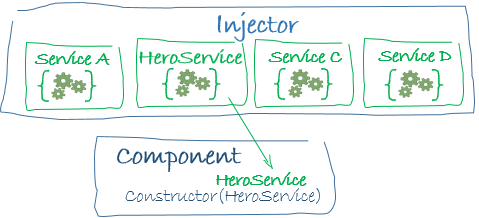
Angular 另外一個很重要的機制,就是 Dependency injection,Angular 提供一個很完整的 DI 機制,在開發過程中,如果需要使用到 service 時,都必須透過注入的方式取得。